
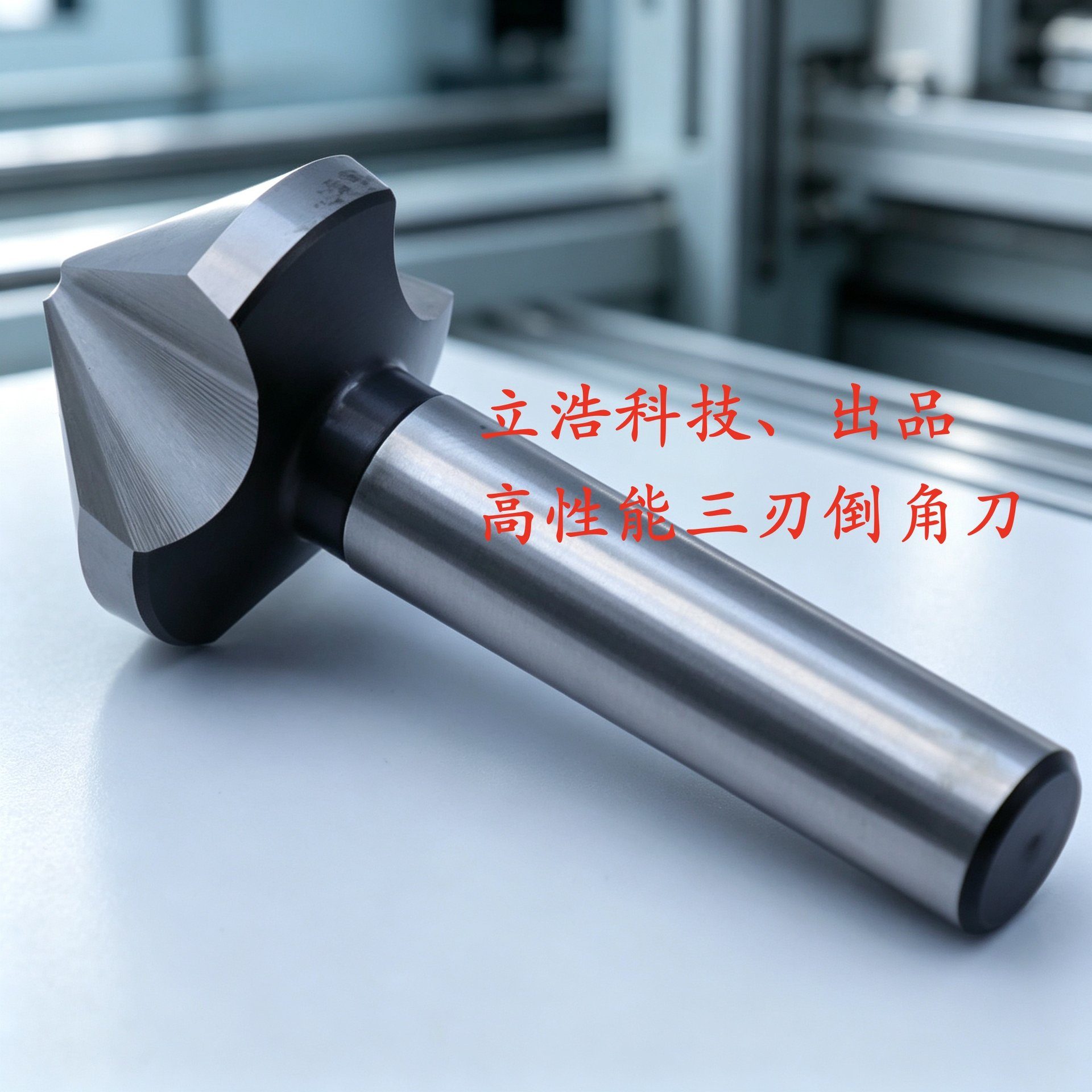
Introduction: Why Angle Matters
Selecting the correct chamfer tool angle is one of the most critical decisions in precision machining. The angle of your chamfer cutter determines not only the geometry of the finished chamfer but also the cutting forces, surface quality, and tool life. With common angles ranging from 60° to 120°, understanding the differences and applications of each is essential for achieving optimal results. In this complete guide, we'll explore every common chamfer tool angle, their standards, and how to choose the right one for your application.
Understanding Chamfer Tool Angle Geometry
Before diving into specific angles, let's clarify what the angle measurement means. The angle of a chamfer tool refers to the included angle — the angle between the two cutting edges when viewed from the side. For example, a 90° chamfer cutter has two cutting edges at 45° to the tool axis, creating a 90° included angle. This produces a chamfer at 45° to the workpiece surface.
It's important to note that the chamfer angle on the workpiece is half of the tool's included angle. So a 90° tool produces a 45° chamfer, an 82° tool produces a 41° chamfer, and so on. This is a common source of confusion, so always double-check whether you're specifying the tool angle or the desired chamfer angle.
The Complete Angle Range: 60° to 120°
60° Chamfer Cutter (30° Chamfer Angle)
The 60° chamfer cutter produces a shallow 30° chamfer and is the least common of the standard angles. This angle is ideal for applications requiring a very gentle chamfer, such as:
- Thin sheet metal where a steeper angle would remove too much material
- Delicate parts where edge strength is critical
- Hard materials where a steeper angle would generate excessive cutting forces
- Decorative chamfers where a subtle edge is desired
Because of the shallow angle, 60° cutters experience lower radial cutting forces, making them suitable for thin-walled or fragile workpieces. However, they remove material more slowly and may require more passes to achieve the desired chamfer size.
82° Chamfer Cutter (41° Chamfer Angle)
The 82° chamfer cutter is specifically designed for American standard countersunk screws, which have an 82° head angle. This is the standard angle used in the United States for flat head screws, and it's essential for any manufacturer producing products for the US market or using American standard fasteners.
Key applications for 82° chamfer cutters include:
- Countersinking for American standard flat head screws (UNC/UNF threads)
- Export products destined for the US market
- Electronics and consumer products using American standard fasteners
- Sheet metal assemblies with US-standard screw heads
If you're manufacturing products for international markets, having both 82° and 90° chamfer cutters in your toolkit is essential to accommodate both American and European/DIN standard fasteners.
90° Chamfer Cutter (45° Chamfer Angle) — The Most Popular
The 90° chamfer cutter is by far the most common and versatile angle, producing a standard 45° chamfer. This angle corresponds to DIN 335 standard countersunk screws used throughout Europe and much of the world. The 90° angle is the default choice for most general-purpose chamfering applications.
Why is 90° so popular?
- Standardization: Matches DIN 335 and ISO standard countersunk screws
- Versatility: Suitable for deburring, edge chamfering, and countersinking
- Balance: Offers a good balance of cutting forces, material removal, and chamfer depth
- Availability: Widely available in all sizes, materials, and flute configurations
- Industry Standard: Most manufacturers and machinists default to 90° for general work
At Lihao Technology, our 90° three-flute chamfer cutters are our best-selling product, manufactured to strict DIN 335 standards from premium high cobalt steel (HSS-E) with hardness up to HRC 67.
100° Chamfer Cutter (50° Chamfer Angle)
The 100° chamfer cutter is a less common but specialized angle used in specific industrial applications. This angle produces a 50° chamfer and is often found in:
- Aerospace applications where specific fastener head angles are required
- Automotive components with proprietary fastener designs
- Specialized mold and die components
- Applications requiring a steeper chamfer than 90° but less than 110°
The 100° angle is sometimes used as a compromise between the standard 90° and the steeper 110° angles, offering slightly more aggressive material removal while maintaining good edge strength.
110° Chamfer Cutter (55° Chamfer Angle)
The 110° chamfer cutter produces a 55° chamfer and is commonly used in specific industrial applications, particularly in:
- Heavy machinery and equipment manufacturing
- Structural steel fabrication
- Applications requiring deep, aggressive chamfers
- Weld preparation where a specific groove angle is needed
- Certain automotive and heavy truck components
The steeper 110° angle removes material more quickly and produces a deeper chamfer for a given tool diameter. However, it also generates higher cutting forces and requires more rigid setups. This angle is not recommended for thin-walled or fragile workpieces.
120° Chamfer Cutter (60° Chamfer Angle)
The 120° chamfer cutter is the steepest standard angle, producing a 60° chamfer. This angle is used for the most aggressive chamfering applications, including:
- Heavy industrial equipment and machinery
- Large structural components
- Weld preparation for thick materials
- Applications requiring maximum material removal
- Specialized fastener heads with 120° angles
The 120° angle provides the most aggressive material removal but also generates the highest cutting forces. This angle requires rigid machine tools, secure workholding, and careful parameter selection to avoid vibration, chatter, or tool breakage. It's not suitable for delicate or thin-walled parts.
Angle Selection Guide: Matching Tool to Application
| Tool Angle | Chamfer Angle | Best For | Cutting Forces | Material Removal |
|---|---|---|---|---|
| 60° | 30° | Thin sheet metal, delicate parts, hard materials | Low | Slow |
| 82° | 41° | American standard countersunk screws, US export products | Low-Medium | Medium |
| 90° | 45° | General purpose, DIN 335 screws, deburring, most applications | Medium | Medium |
| 100° | 50° | Aerospace, specialized fasteners, automotive | Medium-High | Medium-Fast |
| 110° | 55° | Heavy machinery, structural steel, weld prep | High | Fast |
| 120° | 60° | Heavy industrial, thick materials, maximum removal | Very High | Very Fast |
Understanding Screw Head Angle Standards
One of the most common reasons for choosing a specific chamfer tool angle is to match the head angle of countersunk screws. Different standards use different angles, and using the wrong angle can result in screw heads that don't sit flush or that protrude above the surface.
DIN 335 / ISO Standard (90°)
The DIN 335 standard, used throughout Europe and many other countries, specifies a 90° countersunk head angle. This is the most common standard worldwide and is used for metric flat head screws (DIN 7991, ISO 10642, etc.). If you're working with metric fasteners, you'll almost certainly need a 90° chamfer cutter.
American Standard (82°)
The American standard, used in the United States and for US-manufactured products, specifies an 82° countersunk head angle for flat head screws (ANSI B18.6.3, ASME B18.6.3). If you're manufacturing products for the US market or using inch-series fasteners, you'll need an 82° chamfer cutter.
Other Standards
Some specialized industries and applications use other angles, such as 100° for certain aerospace fasteners or 120° for specific heavy machinery applications. Always consult the fastener specification or drawing to determine the correct angle.
How to Calculate Chamfer Depth for Different Angles
The relationship between tool angle, chamfer diameter, and chamfer depth is important for achieving the desired chamfer size. For a given tool angle, the chamfer depth (d) is related to the chamfer diameter (D) by the formula:
d = (D / 2) × tan(θ/2)
Where θ is the tool's included angle. For example:
- 90° tool, 10mm chamfer diameter: d = 5 × tan(45°) = 5 × 1 = 5mm depth
- 82° tool, 10mm chamfer diameter: d = 5 × tan(41°) = 5 × 0.869 = 4.35mm depth
- 120° tool, 10mm chamfer diameter: d = 5 × tan(60°) = 5 × 1.732 = 8.66mm depth
As you can see, steeper angles produce deeper chamfers for the same diameter, which is why they remove material more quickly but also generate higher cutting forces.
Lihao Technology: Complete Angle Range, Premium Quality
At Lihao Technology, we offer a complete range of chamfer tool angles from 60° to 120°, ensuring you have the right tool for every application. All our chamfer cutters are manufactured from premium imported high cobalt steel (HSS-E) with hardness up to HRC 67, providing exceptional wear resistance, heat resistance, and tool life.
Our Complete Product Range
- Angles: 60°, 82°, 90°, 100°, 110°, 120°
- Sizes: φ8mm to φ30mm (custom sizes available)
- Designs: Three-flute (standard) and single-flute (special order)
- Materials: HSS-E (high cobalt steel) with optional TiN/TiCN/TiAlN coatings
- Standards: Manufactured to DIN 335 and ISO standards
Why Choose Lihao Technology Chamfer Cutters?
- Premium Materials: Imported high-end HSS-E with guaranteed HRC 67 hardness
- Precision Grinding: CNC ground for perfect symmetry, sharp cutting edges, and consistent performance
- Strict Quality Control: Every tool is inspected for angle accuracy, runout, and surface finish
- Factory Direct Pricing: As a direct manufacturer with 20 years of experience, we offer competitive prices without middleman markup
- Technical Support: Our engineering team can help you select the right angle, size, and parameters for your application
- Custom Solutions: Need a special angle, size, or coating? We can manufacture custom tools to your specifications
Tips for Optimal Performance by Angle
For Shallow Angles (60°-82°):
- Use higher feed rates since cutting forces are lower
- Multiple passes may be needed for larger chamfers
- Ideal for thin materials and delicate parts
- Ensure proper chip evacuation, especially with single-flute designs
For Standard Angles (90°-100°):
- Follow manufacturer-recommended cutting parameters
- Use coolant to extend tool life and improve surface finish
- Three-flute designs provide the best balance of speed and finish
- Regularly inspect cutting edges for wear and re-sharpen as needed
For Steep Angles (110°-120°):
- Use lower feed rates to manage higher cutting forces
- Ensure rigid setup with secure workholding and short tool overhang
- Use rigid machine tools with sufficient power and torque
- Consider climb milling to reduce cutting forces and improve finish
- Monitor for vibration or chatter and adjust parameters accordingly
Conclusion
Choosing the right chamfer tool angle is essential for achieving optimal results in precision machining. From the shallow 60° angle for delicate work to the aggressive 120° angle for heavy industrial applications, each angle has its unique advantages and ideal uses. The 90° angle remains the most versatile and popular choice for general-purpose work, matching DIN 335 standard fasteners and offering an excellent balance of performance and durability.
At Lihao Technology, we offer a complete range of chamfer tool angles from 60° to 120°, all manufactured from premium HSS-E material to the highest quality standards. With over 20 years of manufacturing experience, strict quality control, and factory-direct pricing, we're your trusted partner for all your chamfering tool needs.
Need help selecting the right angle for your application? Contact our technical team today at 15818389531 (WeChat same number) for expert advice and personalized recommendations. We're here to help you achieve the best results possible.


