
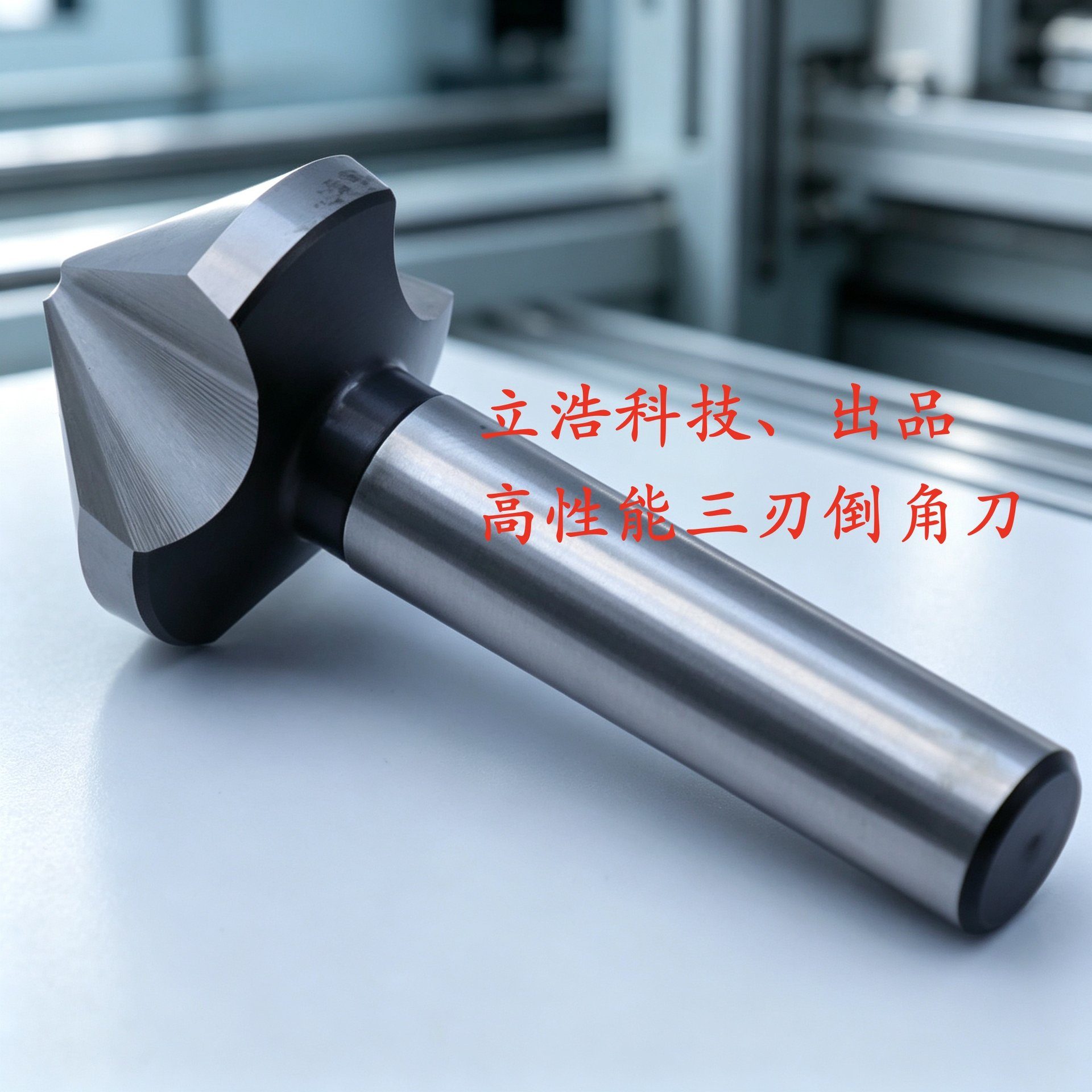
Introduction: The Importance of Tool Selection
Selecting the right chamfering tool can mean the difference between a perfect, consistent finish and frustrating tool failure, poor surface quality, and costly downtime. With so many options available — different materials, flute counts, angles, sizes, and coatings — choosing the right tool for your specific application can be overwhelming. In this comprehensive guide, we'll walk you through every factor to consider when selecting a chamfering tool, drawing on Lihao Technology's 20 years of experience manufacturing precision cutting tools for industries worldwide.
Factor 1: Workpiece Material
The material you're machining is the single most important factor in tool selection. Different materials have different cutting characteristics, and the right tool for aluminum may be completely wrong for stainless steel or titanium.
Soft Materials (Aluminum, Copper, Brass, Plastic)
For soft, non-ferrous materials, the key considerations are chip evacuation and preventing built-up edge (BUE). Single-flute tools with polished flutes can work well for aluminum, as they provide excellent chip clearance. However, for most applications, a good quality HSS or HSS-E three-flute tool with a polished or coated surface will provide excellent results.
- Recommended material: HSS or HSS-E (high cobalt steel)
- Recommended coating: TiN or uncoated with polished flutes
- Flute count: Single-flute for deep work, three-flute for general use
- Cutting speed: Higher speeds (30-60 m/min)
Carbon Steel and Low-Alloy Steel
For carbon steels and low-alloy steels, HSS-E (high cobalt steel) tools provide an excellent balance of hardness, toughness, and heat resistance. The cobalt content helps the tool maintain cutting edge integrity at the elevated temperatures generated when machining steel.
- Recommended material: HSS-E (high cobalt steel, HRC 64-67)
- Recommended coating: TiN or TiCN for improved wear resistance
- Flute count: Three-flute for stability and surface finish
- Cutting speed: Medium speeds (15-30 m/min)
Stainless Steel and High-Alloy Steel
Stainless steels and high-alloy steels are among the most challenging materials for chamfering tools. Their high strength, work-hardening tendency, and poor thermal conductivity generate high cutting temperatures and rapid tool wear. For these materials, premium HSS-E tools with appropriate coatings are essential.
- Recommended material: Premium HSS-E (high cobalt steel, HRC 66-67)
- Recommended coating: TiAlN or AlTiN for high-temperature performance
- Flute count: Three-flute for stability and reduced vibration
- Cutting speed: Lower speeds (8-20 m/min) with generous coolant
Hardened Steel and Tool Steel
For hardened steels (above HRC 45) and tool steels, the extreme hardness requires tools with exceptional red hardness and wear resistance. While carbide tools are sometimes used for very hard materials, premium HSS-E tools with advanced coatings can handle most hardened steel chamfering applications at a lower cost.
- Recommended material: Premium HSS-E (M42 grade, HRC 67-68)
- Recommended coating: TiAlN or AlCrN for maximum heat resistance
- Flute count: Three-flute for stability
- Cutting speed: Low speeds (5-15 m/min) with flood coolant
Titanium and Nickel-Based Alloys
Titanium and nickel-based alloys (Inconel, Hastelloy, etc.) are among the most difficult materials to machine. Their low thermal conductivity causes heat to concentrate at the cutting edge, while their high strength and chemical reactivity lead to rapid tool wear. For these materials, premium HSS-E tools with advanced coatings and careful parameter selection are essential.
- Recommended material: Premium HSS-E (M42 grade)
- Recommended coating: TiAlN or AlTiN with thick coating
- Flute count: Three-flute for maximum stability
- Cutting speed: Very low speeds (3-10 m/min) with high-pressure coolant
At Lihao Technology, all our chamfering tools are manufactured from premium imported high cobalt steel (HSS-E) with hardness up to HRC 67, making them suitable for a wide range of materials from aluminum to stainless steel and even hardened tool steels.
Factor 2: Flute Count
The number of flutes affects cutting stability, surface finish, chip evacuation, and tool life. As we discussed in our previous article, three-flute and single-flute are the most common designs, each with specific advantages.
Three-Flute Chamfer Cutters (Recommended for Most Applications)
Three-flute chamfer cutters are the most widely used design, offering an excellent balance of stability, surface finish, and tool life. The three cutting edges distribute cutting forces evenly, reducing vibration and producing smoother surfaces.
Best for: Stainless steel, alloy steel, precision machining, high-volume production, applications requiring good surface finish, thin-walled parts prone to vibration.
Single-Flute Chamfer Drills
Single-flute chamfer drills have one large flute providing excellent chip evacuation, making them suitable for soft materials and deep countersinking. However, the single cutting edge can cause vibration and poorer surface finish.
Best for: Aluminum, copper, brass, plastic, deep countersinking, low-volume work, budget-conscious applications.
Multi-Flute (4+ Flutes)
Multi-flute tools with four or more flutes are less common for chamfering but can be used for high-volume production where maximum feed rates and surface finish are required. However, the smaller flutes can lead to chip packing issues, especially in gummy materials.
Factor 3: Tool Angle
As covered in our complete angle guide, the tool angle determines the chamfer geometry and must be matched to your application requirements. The most common angles are:
- 90° (45° chamfer): The most versatile and common angle, matching DIN 335 standard countersunk screws. Recommended for general-purpose work.
- 82° (41° chamfer): Matches American standard countersunk screws. Essential for US-market products.
- 60° (30° chamfer): Shallow angle for thin sheet metal and delicate parts.
- 110°-120° (55°-60° chamfer): Steep angles for heavy industrial applications and maximum material removal.
Always match the tool angle to the fastener head angle or desired chamfer geometry specified in your drawing.
Factor 4: Tool Size
Selecting the correct tool size is crucial for achieving the desired chamfer diameter and depth. The tool diameter should be larger than the maximum chamfer diameter you need to produce, with sufficient margin to avoid the tool's center (dead zone) contacting the workpiece.
Size Selection Guidelines
- Tool diameter: Should be 1.5-2 times the maximum chamfer diameter
- Shank diameter: Should match your tool holder or collet size
- Overall length: Choose the shortest tool that can reach the workpiece to minimize vibration and maximize rigidity
- Flute length: Should be sufficient to achieve the desired chamfer depth without the shank contacting the workpiece
At Lihao Technology, we offer chamfer cutters in sizes from φ8mm to φ30mm, with custom sizes available for special applications. Our standard sizes cover the vast majority of chamfering applications.
Factor 5: Coatings
Tool coatings can significantly improve performance by increasing hardness, reducing friction, and improving heat resistance. The right coating depends on the workpiece material and cutting conditions.
TiN (Titanium Nitride)
The most common and cost-effective coating, TiN provides good wear resistance and low friction. It's suitable for general-purpose machining of carbon steel, alloy steel, and non-ferrous materials at moderate cutting speeds.
Best for: General-purpose work, carbon steel, alloy steel, aluminum, copper, brass.
TiCN (Titanium Carbonitride)
TiCN offers higher hardness and better wear resistance than TiN, with excellent performance at medium to high cutting speeds. It's particularly good for machining stainless steels and alloy steels.
Best for: Stainless steel, alloy steel, high-speed machining, abrasive materials.
TiAlN / AlTiN (Titanium Aluminum Nitride)
TiAlN and AlTiN coatings offer exceptional high-temperature performance, maintaining hardness at cutting temperatures up to 800-900°C. They're ideal for high-speed machining, hard materials, and dry or minimum-quantity lubrication (MQL) applications.
Best for: Stainless steel, hardened steel, titanium, high-speed machining, dry machining, high-temperature applications.
Uncoated
Uncoated tools are suitable for some applications, particularly when machining soft, non-ferrous materials where built-up edge is not a concern. They're also easier to re-sharpen and can be a cost-effective choice for low-volume work.
Best for: Aluminum, copper, brass, plastic, low-volume work, easy re-sharpening.
Factor 6: Application Type
Different applications have different requirements, and the optimal tool may vary depending on whether you're doing general deburring, precision countersinking, or heavy-duty chamfering.
General Deburring and Edge Breaking
For general deburring and edge breaking, the priority is often speed and tool life rather than absolute precision. A good quality 90° three-flute HSS-E tool will handle most deburring applications efficiently.
- Recommended: 90° three-flute HSS-E, TiN or uncoated
- Parameters: Moderate to high feed rates, moderate speeds
Precision Countersinking
For precision countersinking where screw head seating and surface finish are critical, tool quality and precision are paramount. A premium 90° or 82° three-flute tool with precise angle accuracy and excellent surface finish is essential.
- Recommended: 90° or 82° three-flute premium HSS-E, TiCN or TiAlN coating
- Parameters: Moderate feed rates, precise depth control, flood coolant
Contour Chamfering
For chamfering along complex contours or 3D surfaces, tool stability and chatter resistance are critical. Three-flute tools with short overall length and rigid shanks are preferred to minimize vibration during contouring operations.
- Recommended: 90° three-flute HSS-E, short length, rigid setup
- Parameters: Moderate feed rates, climb milling, rigid workholding
Heavy-Duty Chamfering
For heavy-duty chamfering of large parts or thick materials, tool strength and material removal rate are key. Larger diameter tools with steep angles (110°-120°) and premium HSS-E material can handle the high cutting forces.
- Recommended: 110°-120° three-flute premium HSS-E, large diameter, TiAlN coating
- Parameters: Lower feed rates, rigid machine and setup, flood coolant
Thin Sheet Metal Chamfering
For thin sheet metal, low cutting forces and minimal tool pressure are essential to avoid part deformation. Shallow angle tools (60°-82°) with sharp cutting edges and polished flutes work best for thin materials.
- Recommended: 60°-82° three-flute or single-flute HSS-E, sharp edges, polished flutes
- Parameters: Higher feed rates, lower speeds, minimal depth per pass
Industry-Specific Recommendations
Automotive Manufacturing
Automotive applications often involve high-volume production of steel and aluminum components. Consistency, tool life, and cycle time are critical.
- Recommended tools: 90° three-flute HSS-E with TiCN or TiAlN coating
- Key considerations: Tool life consistency, cycle time optimization, coolant compatibility
Aerospace and Defense
Aerospace applications demand the highest precision and surface quality, often involving difficult-to-machine materials like titanium, Inconel, and stainless steel.
- Recommended tools: Premium HSS-E three-flute with TiAlN coating, precise angle accuracy
- Key considerations: Surface finish requirements, material-specific parameters, documentation and traceability
Mold and Die Manufacturing
Mold and die applications often involve hardened tool steels and complex contours. Tool rigidity, chatter resistance, and edge quality are important.
- Recommended tools: Premium HSS-E (M42) three-flute with TiAlN coating, short length for rigidity
- Key considerations: Hardened steel capability, contouring stability, re-sharpenability
Electronics and Consumer Products
Electronics and consumer products often involve thin sheet metal, aluminum, and plastic, with cosmetic appearance being important.
- Recommended tools: 90° or 82° three-flute HSS-E with polished flutes, sharp cutting edges
- Key considerations: Surface finish, burr-free edges, thin material capability
General Machining and Job Shops
For general machining and job shops handling a variety of materials and applications, versatility is key. A good selection of 90° three-flute HSS-E tools in various sizes will handle most jobs efficiently.
- Recommended tools: 90° three-flute HSS-E in multiple sizes, with and without coatings
- Key considerations: Versatility, cost-effectiveness, reliable performance across materials
Lihao Technology: Your Trusted Partner for Chamfering Tools
With over 20 years of experience manufacturing precision cutting tools, Lihao Technology (东莞市立浩五金科技有限公司) has the expertise and product range to meet your chamfering tool needs, regardless of your industry or application.
Our Complete Product Range
- Materials: Premium imported high cobalt steel (HSS-E), HRC 64-67
- Angles: 60°, 82°, 90°, 100°, 110°, 120°
- Sizes: φ8mm to φ30mm (custom sizes available)
- Designs: Three-flute (standard) and single-flute (special order)
- Coatings: TiN, TiCN, TiAlN, AlTiN, or uncoated
- Standards: DIN 335, ISO, and custom specifications
Why Choose Lihao Technology?
- Premium Materials: We use only imported high-end HSS-E material with guaranteed hardness
- Precision Manufacturing: CNC ground for perfect symmetry, sharp edges, and consistent performance
- Strict Quality Control: Every tool is inspected for angle accuracy, runout, and surface finish
- Factory Direct Pricing: As a direct manufacturer, we offer competitive prices without middleman markup
- Technical Expertise: Our engineering team can help you select the right tool and parameters for your application
- Custom Solutions: Need a special size, angle, coating, or design? We can manufacture custom tools to your specifications
- Fast Delivery: Standard sizes in stock for immediate shipment; custom tools typically ready in 7-15 days
Quick Selection Checklist
Use this checklist to quickly narrow down your chamfering tool selection:
- What material are you machining? → Determines tool material and coating
- What chamfer angle do you need? → Match to fastener head or drawing specification (90° for DIN, 82° for US standard)
- What's the maximum chamfer diameter? → Select tool diameter 1.5-2x larger
- How important is surface finish? → Three-flute for better finish, single-flute for chip clearance
- What's your production volume? → Premium coated tools for high volume, uncoated for low volume
- Do you have rigid setup? → Steeper angles and larger tools require more rigidity
- What's your budget? → HSS-E offers excellent value; consider coatings for long-term savings
Conclusion
Choosing the right chamfering tool requires careful consideration of multiple factors, including workpiece material, flute count, tool angle, size, coating, and application requirements. By understanding these factors and how they interact, you can select the optimal tool for your specific needs, achieving better surface finish, longer tool life, and lower overall costs.
At Lihao Technology, we're committed to helping our customers find the perfect chamfering tool solutions. With 20 years of manufacturing experience, a complete product range, and expert technical support, we're your trusted partner for all your cutting tool needs. Whether you need a standard 90° three-flute chamfer cutter or a custom-designed tool for a specialized application, we have the expertise and capability to deliver.
Ready to find the perfect chamfering tool for your application? Contact our technical team today at 15818389531 (WeChat same number) or email us at 15338372359@139.com for expert advice and personalized recommendations. We're here to help you achieve the best results possible.


