
Introduction: The Flute Count Dilemma
When selecting a chamfering tool, one of the most important decisions you'll make is the number of flutes. Three-flute chamfer cutters and single-flute chamfer drills each have their unique advantages and ideal applications. Choosing the right one can significantly impact your machining efficiency, surface quality, and tooling costs. In this comprehensive guide, we'll compare these two popular designs and help you make an informed decision.
Understanding Flute Design Basics
Before diving into the comparison, let's understand what flutes do. The flutes of a chamfering cutter serve three primary functions: they create the cutting edges, provide space for chip evacuation, and influence the tool's rigidity and vibration characteristics. The number of flutes directly affects all of these factors.
Single-Flute Design
A single-flute chamfer drill has one cutting edge and one large flute. This design is simple and cost-effective, with a deep gullet that provides excellent chip clearance. However, the single cutting edge means the tool engages the workpiece intermittently, which can lead to vibration and poorer surface finish.
Three-Flute Design
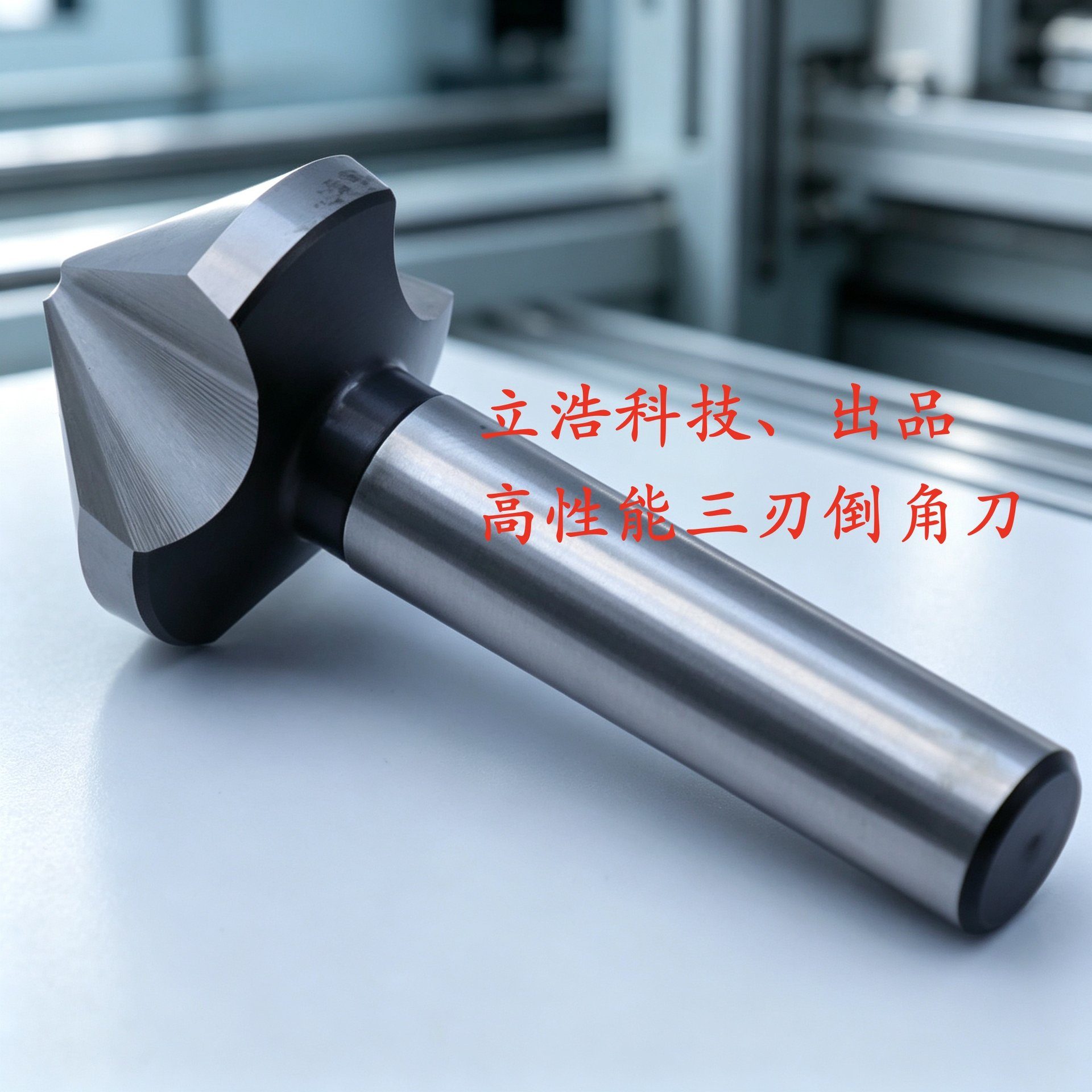
A three-flute chamfer cutter has three cutting edges evenly spaced around the tool. This design provides more consistent cutting engagement, reduced vibration, and better surface quality. The three-flute design is the most widely used in industry today, offering an excellent balance of performance and durability.
Detailed Comparison: Three-Flute vs. Single-Flute
1. Vibration and Stability
Three-flute cutters win this category hands down. With three cutting edges engaging the workpiece simultaneously, the cutting forces are more evenly distributed, resulting in significantly less vibration. This is particularly important when machining thin-walled parts, long overhangs, or materials prone to chatter.
Single-flute tools, with only one cutting edge, experience intermittent cutting forces that can cause noticeable vibration, especially at higher feed rates. This vibration not only affects surface quality but can also lead to premature tool wear and even tool breakage in extreme cases.
At Lihao Technology, our three-flute chamfer cutters are precision-ground to ensure perfect symmetry and balance, minimizing vibration even in the most demanding applications.
2. Surface Finish Quality
Surface finish is where the three-flute design truly shines. The multiple cutting edges produce a smoother, more uniform chamfer surface because each cutting edge removes a smaller amount of material and the tool marks overlap more frequently.
In practical terms, a three-flute cutter can produce a surface finish of Ra 1.6-3.2 μm under optimal conditions, while a single-flute drill typically produces Ra 3.2-6.3 μm. For applications requiring cosmetic appearance or tight tolerances, the three-flute design is clearly superior.
Single-flute tools can still produce acceptable finishes for non-critical applications, but achieving good surface quality requires lower feed rates and more careful parameter selection.
3. Tool Life and Wear Resistance
Tool life is another area where three-flute cutters have an advantage. Because the cutting load is distributed across three edges rather than one, each edge experiences less wear per cut. This results in longer overall tool life, especially in production environments where consistent performance is critical.
Additionally, the reduced vibration of three-flute cutters means less impact loading on the cutting edges, further extending tool life. In abrasive materials like cast iron or stainless steel, the difference in tool life can be significant — often 30-50% longer for three-flute tools.
Single-flute tools, while simpler and less expensive, tend to wear faster because all the cutting work is done by a single edge. However, they are easier to re-sharpen and can be a cost-effective choice for low-volume, non-critical work.
4. Chip Evacuation
This is one area where single-flute tools have an advantage. The single large flute provides more space for chip evacuation, which can be beneficial when machining materials that produce long, stringy chips, such as aluminum or low-carbon steel.
Three-flute cutters have smaller flutes, which can sometimes lead to chip packing in deep chamfers or when machining gummy materials. However, in most chamfering applications — which are typically shallow — chip evacuation is not a major concern, and the three-flute design performs adequately.
For deep countersinking or applications with poor chip clearance, a single-flute tool may be the better choice. For standard chamfering and deburring, the three-flute design is generally preferred.
5. Cutting Speed and Feed Rate
Three-flute cutters can typically handle higher feed rates than single-flute tools because the cutting load is distributed across more edges. This means you can achieve faster cycle times without sacrificing surface quality or tool life.
For example, a typical three-flute HSS-E chamfer cutter might run at 0.1-0.2 mm per tooth, resulting in a feed rate of 0.3-0.6 mm per revolution. A single-flute tool, by comparison, might only run at 0.05-0.1 mm per tooth, resulting in a feed rate of 0.05-0.1 mm per revolution.
In high-volume production environments, this difference in feed rate can translate to significant time savings and increased productivity.
6. Cost Considerations
Single-flute chamfer drills are generally less expensive than three-flute cutters because they are simpler to manufacture. For hobbyists, small shops, or low-volume applications, the lower initial cost of single-flute tools can be attractive.
However, when you factor in tool life, surface quality, and cycle time, three-flute cutters often provide better value in the long run. The higher initial cost is typically offset by longer tool life, faster machining, and better quality — especially in production environments.
At Lihao Technology, we offer both single-flute and three-flute chamfering tools at factory-direct prices, ensuring you get the best value regardless of which design you choose.
Application Guide: When to Use Which
Choose Three-Flute Chamfer Cutters When:
- You need excellent surface finish and dimensional accuracy
- You're machining stainless steel, alloy steel, or other hard materials
- You're running high-volume production where cycle time matters
- You're machining thin-walled or vibration-prone parts
- You want longer tool life and consistent performance
- You're doing cosmetic chamfering where appearance is important
Choose Single-Flute Chamfer Drills When:
- You're doing low-volume, non-critical work
- You're machining aluminum or other soft, gummy materials
- You need deep countersinking with challenging chip evacuation
- Budget is a primary concern
- You need a simple, easy-to-use tool for general deburring
- You're working with thin sheet metal where tool pressure is a concern
Lihao Technology: Quality Tools for Every Application
Whether you need the precision and stability of a three-flute chamfer cutter or the simplicity and chip clearance of a single-flute chamfer drill, Lihao Technology has you covered. With over 20 years of experience manufacturing cutting tools, we understand the nuances of flute design and can help you select the perfect tool for your application.
Our Three-Flute Chamfer Cutters
Our flagship three-flute chamfer cutters are manufactured from premium imported high cobalt steel (HSS-E) with hardness up to HRC 67. Available in angles from 60° to 120° and sizes from φ8mm to φ30mm, these tools deliver exceptional surface finish, long tool life, and reliable performance in even the most demanding applications.
Our Single-Flute Chamfer Drills
For applications where single-flute design is preferred, we offer high-quality single-flute chamfer drills made from the same premium HSS-E material. These tools provide excellent chip evacuation and are ideal for soft materials, deep countersinking, and budget-conscious applications.
Why Choose Lihao Technology?
- Premium Materials: Imported high-end HSS-E with guaranteed HRC 67 hardness
- Precision Manufacturing: Strict quality control to DIN 335 standards
- Complete Range: 60°-120° angles, φ8-φ30mm sizes, single-flute and three-flute designs
- Factory Direct: Competitive prices without middleman markup
- Technical Support: Our engineering team can help you select the right tool and parameters
- Custom Solutions: Need a special size or design? We can manufacture custom tools to your specifications
Conclusion
The choice between three-flute and single-flute chamfer cutters ultimately depends on your specific application, requirements, and budget. For most precision machining applications — especially in hard materials and high-volume production — the three-flute design is the clear winner, offering better surface finish, longer tool life, and faster cycle times. For low-volume work, soft materials, or budget-conscious applications, the single-flute design can be a practical and cost-effective choice.
Regardless of which design you choose, Lihao Technology is committed to providing high-quality, reliable chamfering tools that deliver consistent performance and excellent value. With 20 years of manufacturing experience and a complete range of sizes and angles, we're your trusted partner for all your chamfering tool needs.
Not sure which tool is right for your application? Contact our technical team today at 15818389531 (WeChat same number) for expert advice and personalized recommendations. We're here to help you achieve the best results possible.


